Choosing ENERGY STAR Appliances That Actually Save You Money
Reading time: 14 minutes
Ever stared at two refrigerators in an appliance store, one priced $200 cheaper than the other, and wondered if the pricier “energy-efficient” model is actually worth it? You’re not alone. Millions of American households face this exact dilemma every year — and many end up making the wrong call because they’re comparing sticker prices instead of lifetime costs.
Here’s the straight talk: Not all ENERGY STAR appliances are created equal. Some deliver genuinely impressive savings. Others offer marginal improvements that barely justify the premium. Knowing the difference is the entire game.
In 2026, with residential electricity rates averaging $0.17 per kWh nationally (up from $0.16 in 2024), smart appliance choices matter more than ever. The good news? This guide gives you a precise, no-fluff roadmap to choosing ENERGY STAR products that put real money back in your pocket.
Table of Contents
- What ENERGY STAR Actually Means in 2026
- Where the Real Savings Hide (and Where They Don’t)
- Appliance-by-Appliance Breakdown
- Real-World Case Studies
- Side-by-Side Comparison Table
- Energy Savings by Appliance Category
- 3 Common Mistakes and How to Avoid Them
- Frequently Asked Questions
- Your Smart-Appliance Savings Roadmap
What ENERGY STAR Actually Means in 2026
ENERGY STAR is a joint program of the U.S. Environmental Protection Agency (EPA) and the U.S. Department of Energy. Launched in 1992, it certifies products that meet strict energy efficiency guidelines — meaning they use less energy to perform the same job as non-certified alternatives.
But here’s what most consumers don’t realize: the ENERGY STAR threshold varies dramatically by product category. A certified dishwasher might only need to be 12% more efficient than the federal minimum standard, while a certified heat pump could be 40–50% more efficient. That gap in certification criteria creates a gap in real-world savings — and it’s your job as a consumer to understand which category delivers the best return.
The 2026 Program Updates You Need to Know
The EPA rolled out updated ENERGY STAR specifications for several categories in late 2025, raising the bar significantly. Key changes include:
- Refrigerators: New 2025/2026 specs require at least 15% better efficiency than the 2021 federal minimum, up from 9%.
- Clothes Washers: The Modified Energy Factor (MEF) threshold was raised, pushing manufacturers to adopt more advanced motor and drum technologies.
- Heat Pump Water Heaters: Now must achieve a Uniform Energy Factor (UEF) of at least 2.0 — meaning they deliver twice the energy output per unit of electricity consumed.
- Smart Thermostats: A new “ENERGY STAR Advanced” tier launched in 2025, recognizing devices that integrate with utility demand-response programs.
Pro Tip: Always check the current certification date on the ENERGY STAR label. Products certified under older specs may still carry the badge but won’t meet today’s higher standards. Look for the yellow EnergyGuide label alongside the ENERGY STAR badge — that’s where annual operating cost estimates live.
Understanding the EnergyGuide Label
The bright yellow EnergyGuide label is arguably more useful than the ENERGY STAR badge itself. It shows:
- Estimated annual energy use (in kilowatt-hours or therms)
- Estimated annual operating cost (based on national average rates)
- A comparison scale showing how this model ranks against similar products
Quick Scenario: Imagine two side-by-side refrigerators. Both carry the ENERGY STAR label. But one uses 420 kWh/year, while the other uses 510 kWh/year. At $0.17/kWh, that’s a $15.30 annual difference — or $229.50 over 15 years. Suddenly, a $30 price premium on the more efficient unit looks like a no-brainer, doesn’t it?
Where the Real Savings Hide (and Where They Don’t)
Not every ENERGY STAR product delivers the same bang for your efficiency buck. The savings potential correlates directly with how much energy the appliance uses in the first place and how dramatically the certified model reduces that consumption.
According to the EPA’s 2025 ENERGY STAR Program Report, certified products across all categories saved Americans approximately $42 billion in energy costs in 2024 alone, avoiding 390 million metric tons of greenhouse gas emissions. Those are staggering numbers — but they’re an aggregate. Your individual experience depends entirely on which appliances you choose and how you use them.
High-impact categories (where ENERGY STAR really pays off):
- Heat pump water heaters
- Central air conditioning systems
- Heat pump HVAC systems
- Smart thermostats
- Clothes washers
Lower-impact categories (where savings are modest):
- Dishwashers (the baseline federal standard is already quite strict)
- Televisions (already very efficient across the board)
- Standard light bulbs (LED technology has commoditized efficiency)
The key insight? Focus your premium budget on appliances that run continuously or cycle on frequently. A refrigerator runs 24/7. A water heater operates multiple times daily. A central AC unit may run for thousands of hours annually in warmer climates. These are your highest-leverage targets.
Appliance-by-Appliance Breakdown
Refrigerators: Your Silent Energy Drain
Refrigerators are among the most compelling ENERGY STAR investments because they run continuously — every hour, every day, for 15+ years. An ENERGY STAR certified refrigerator uses, on average, 9–15% less energy than the federal minimum standard. Top-tier models (look for the ENERGY STAR Most Efficient designation) can exceed 25% savings.
The average U.S. refrigerator consumes about 450 kWh annually. An ENERGY STAR model might use 380 kWh — saving roughly 70 kWh/year, or about $12 at current rates. That sounds modest, but over a 15-year lifespan at projected 2026–2040 rate increases, the cumulative savings climb to $250–$350. Add a potential $50–$150 utility rebate, and the math gets genuinely attractive.
What to look for: French door and bottom-freezer configurations with through-the-door ice dispensers are typically less efficient than top-freezer models. If energy efficiency is your priority, choose a simpler configuration and look for the “Most Efficient” designation.
Heat Pump Water Heaters: The Single Best Investment
If you make only one ENERGY STAR upgrade this decade, make it a heat pump water heater (HPWH). These units use electricity to move heat from surrounding air into the water, rather than generating heat directly — making them 2–4 times more efficient than conventional electric resistance water heaters.
The numbers are compelling: A standard electric water heater might cost $550/year to operate. An ENERGY STAR HPWH with a UEF of 3.5 could bring that cost down to roughly $160/year — a $390 annual savings. Even with a $1,200 upfront premium, you’re looking at a payback period under four years. And the federal tax credit under the extended Inflation Reduction Act provisions covers 30% of installation costs (up to $600 for the appliance cost, separate credits for installation) in 2026.
Pro Tip: HPWHs work best in unconditioned spaces (garages, basements) where they can extract heat from the ambient air without adding cooling load to your living space. In hot climates, they actually double as dehumidifiers — a useful bonus.
Central Air Conditioning: The Long Game
ENERGY STAR certified central AC systems must achieve a Seasonal Energy Efficiency Ratio (SEER2) of at least 16 in northern climates and higher in southern regions. The most efficient models reach SEER2 ratings above 20.
The Department of Energy estimates that upgrading from an older 10 SEER system to a 20 SEER2 unit can cut cooling costs by 50%. For a household spending $800/year on air conditioning, that’s $400 in annual savings. Over a 15-year equipment lifespan, even accounting for installation costs of $4,000–$8,000, the economics frequently favor the premium system — especially in high-cooling-load regions like the Southeast and Southwest.
Smart Thermostats: Maximum Leverage, Minimum Cost
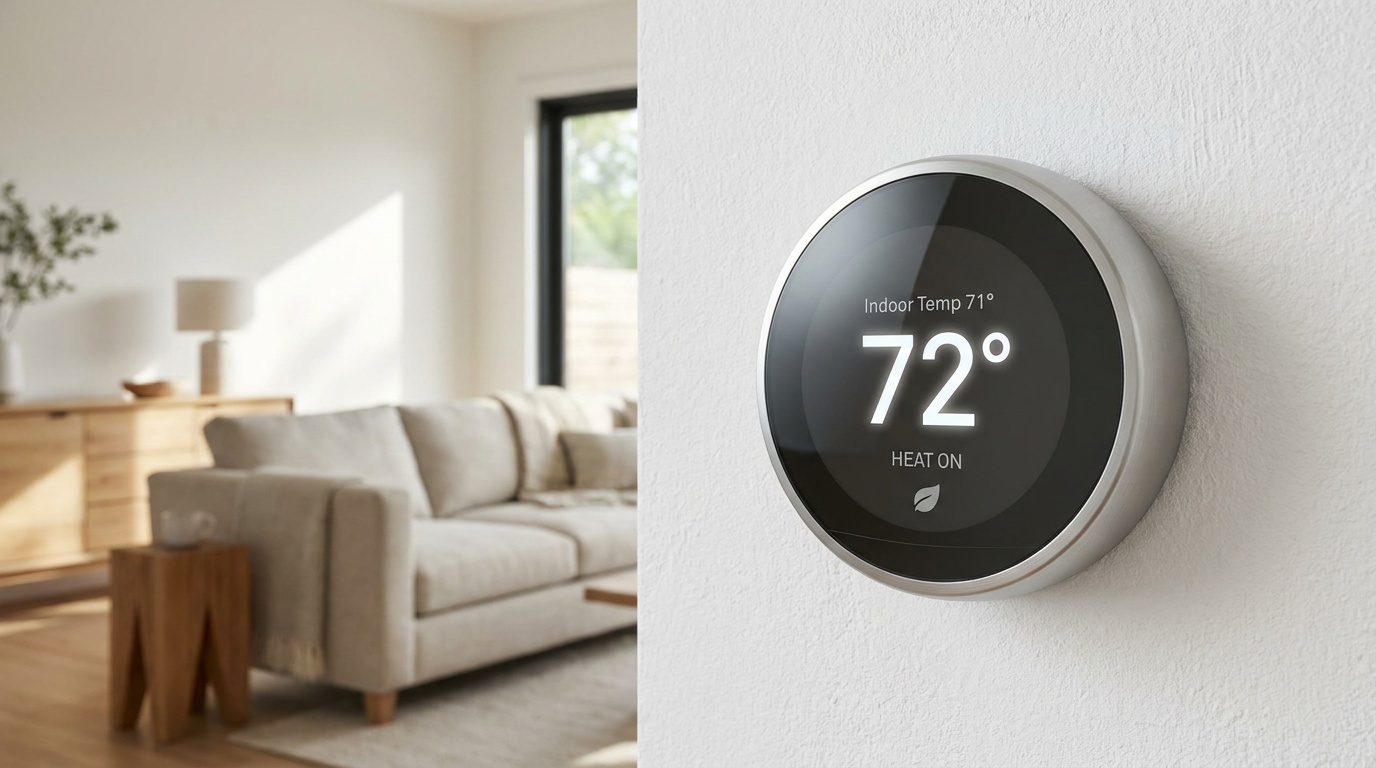
Among all ENERGY STAR products, smart thermostats offer the best combination of low cost, fast payback, and measurable savings. At $150–$300 retail, a certified smart thermostat can save the average household 8–10% on heating costs and 15% on cooling costs, according to ENERGY STAR data.
That’s an average of $50–$150 in annual savings — delivering a payback period of 1–3 years. The new “Advanced” tier launched in 2025 adds utility demand-response integration, which can earn households an additional $50–$100/year in utility bill credits by allowing brief, automated temperature adjustments during peak grid demand periods.
Clothes Washers: Water and Energy Together
ENERGY STAR certified clothes washers use about 25% less energy and 33% less water than standard models. Over 11 years of typical use, that adds up to approximately $370 in energy and water savings. Front-load machines consistently outperform top-loaders in efficiency metrics — though high-efficiency top-load agitator-free models have closed the gap considerably by 2026.
Real-World Case Studies
Case Study 1: The Martinez Family in Phoenix, Arizona
The Martinez family upgraded their aging 2009 HVAC system and electric water heater in early 2025. They replaced a 10 SEER central AC with an ENERGY STAR-certified 18 SEER2 heat pump system and swapped their 40-gallon electric resistance water heater for a 50-gallon ENERGY STAR heat pump model.
Results after 12 months:
- Annual cooling costs dropped from $1,240 to $690 — a $550 savings
- Water heating costs fell from $580 to $145 — a $435 savings
- Total first-year savings: $985
- Federal tax credits claimed: $2,100 (covering 30% of eligible equipment costs)
- Effective payback period on the premium spent: Under 4 years
“We honestly weren’t expecting to break even this fast,” said homeowner Elena Martinez. “The utility rebates and the federal credit made the decision almost obvious in hindsight.”
Case Study 2: Single Renter Strategy in Chicago
Not everyone can replace HVAC systems. Marcus Chen, a renter in a 1-bedroom Chicago apartment, focused his ENERGY STAR strategy on the appliances he controlled: a smart thermostat (landlord-approved), a portable ENERGY STAR room air conditioner, an ENERGY STAR refrigerator he brought when moving in, and an ENERGY STAR certified dehumidifier.
His total investment was approximately $680. After one year, his estimated annual savings compared to typical apartment appliance usage were:
- Smart thermostat: $85 saved
- Room AC upgrade: $62 saved
- Efficient refrigerator: $28 saved
- Total: $175/year — a payback under 4 years with zero structural modifications
Marcus’s story illustrates an important point: you don’t need to own a home or undertake major renovations to benefit meaningfully from ENERGY STAR choices.
Side-by-Side Comparison: ENERGY STAR vs. Standard Appliances
| Appliance | Standard Annual Cost | ENERGY STAR Annual Cost | Annual Savings | Typical Payback Period |
|---|---|---|---|---|
| Heat Pump Water Heater | $550 | $160 | $390 | 3–5 years |
| Central AC (18 vs 10 SEER2) | $1,100 | $590 | $510 | 6–10 years |
| Smart Thermostat | $900 (heating+cooling) | $800 | $100 | 1–3 years |
| Clothes Washer | $135 | $90 | $45 | 4–7 years |
| Refrigerator | $85 | $65 | $20 | 5–10 years |
*Annual costs based on 2026 national average electricity rates of $0.17/kWh. Payback periods calculated on typical premium over standard models, before rebates and tax credits.
Energy Savings by Appliance Category (Annual $)
This chart illustrates annual dollar savings potential when choosing ENERGY STAR certified models over standard alternatives:
$390/yr
$510/yr
$100/yr
$45/yr
$20/yr
Bar widths scaled relative to the highest-savings category. Central AC offers the highest absolute savings for households with high cooling loads; heat pump water heaters offer the most consistent savings across all climates.
3 Common Mistakes (and How to Avoid Them)
Mistake #1: Chasing the Badge Without Checking the Numbers
The ENERGY STAR badge tells you a product meets a minimum efficiency threshold. It doesn’t tell you how it compares to other certified products in the same category. Two ENERGY STAR refrigerators can differ by 30% in actual energy consumption.
Fix: Always compare the yellow EnergyGuide label’s annual kWh figure — not just the presence of the ENERGY STAR badge. On the ENERGY STAR website (energystar.gov), use the “Most Efficient” filter when searching for appliances. These products represent the top tier of performance within each category, and the annual energy use data is searchable and sortable.
Mistake #2: Ignoring Available Rebates and Tax Credits
In 2026, the combination of federal tax credits (extended through the Inflation Reduction Act), state utility rebates, and local programs can reduce the effective cost of qualifying appliances by 30–60%. Yet surveys consistently show that fewer than 40% of purchasers actually claim all available incentives.
Fix: Before purchasing any major appliance, spend 20 minutes on the ENERGY STAR Rebate Finder tool (energystar.gov/rebate-finder) and the DSIRE database (dsireusa.org) for state-specific incentives. Enter your ZIP code and appliance type to get a consolidated list of current offers. In many states, utility rebates alone can offset $200–$600 of purchase price for high-efficiency HVAC equipment and heat pump water heaters.
Mistake #3: Replacing Functioning Appliances Too Early
Here’s a perspective often overlooked: manufacturing a new appliance requires significant embedded energy. Replacing a perfectly functional 5-year-old refrigerator to gain $20/year in energy savings will likely never recoup the carbon and resource cost of production — or your financial investment in the new unit.
Fix: Use the “replace vs. repair” framework strategically. Generally, plan ENERGY STAR upgrades when:
- The existing appliance needs a major repair costing more than 50% of replacement cost
- The existing appliance is more than 15 years old (for refrigerators, washers) or 10–12 years old (for HVAC systems, water heaters)
- You’re undergoing a renovation that makes installation straightforward
- Utility rebates or tax credits make the financial case compelling even for younger equipment
Frequently Asked Questions
Is ENERGY STAR certification worth the price premium in 2026?
For high-energy-use appliances — particularly heat pump water heaters, central HVAC systems, and smart thermostats — the premium almost always pays off within the appliance’s lifespan, especially after factoring in federal tax credits and utility rebates available in 2026. For lower-consumption products like dishwashers or televisions, the premium is smaller and the savings are modest, though often still positive over time. The key is to run the math using the EnergyGuide annual cost estimate, your actual utility rate, and available incentives before purchasing.
How do I find out what rebates are available for ENERGY STAR appliances in my area?
The ENERGY STAR Rebate Finder at energystar.gov is your first stop — it aggregates utility and manufacturer rebate data by ZIP code. For state-level programs including tax credits and low-income assistance, check DSIRE (dsireusa.org). For federal tax credits, the IRS Form 5695 covers Residential Clean Energy Credits and Energy Efficient Home Improvement Credits — both extended through 2032 under current legislation. Many utilities also offer free home energy audits that identify the highest-priority upgrades for your specific home, which is worth requesting before making any major purchase.
Can renters benefit from ENERGY STAR products, or is it only for homeowners?
Renters can absolutely benefit — the opportunity set is just different. Portable appliances you own and take with you when you move, such as a smart thermostat (many landlords approve this), room air conditioners, refrigerators, dehumidifiers, and portable fans, are all fair game. Some states and utilities offer rebates applicable to renters for these portable items. The key is focusing on appliances within your control and prioritizing those with the fastest payback periods, since you may not stay in the unit long enough to recoup investments with longer payback windows. As Marcus Chen’s story illustrates, $175/year in savings with modest investment is entirely achievable as a renter.
Your Smart-Appliance Savings Roadmap: Start Here, Save More
You now have a clear picture of where efficiency dollars go furthest. But knowledge without action is just information. Here’s your practical 5-step implementation roadmap:
- Audit your current appliances this week. Note the age, model number, and annual energy use (from the EnergyGuide label or manufacturer specs) for your top energy consumers: HVAC system, water heater, refrigerator, and washer. This is your baseline.
- Identify your highest-priority upgrade. If your water heater is electric and over 8 years old, or your central AC system predates 2012, these are your best candidates. Use the DOE’s savings calculator at energy.gov to quantify potential annual savings before committing.
- Research available incentives before budgeting. Spend 30 minutes on the ENERGY STAR Rebate Finder and DSIRE. In 2026, federal credits alone can cover 30% of qualifying equipment costs — factoring this in before you compare sticker prices changes the entire decision.
- Compare within the ENERGY STAR tier, not just against non-certified products. Filter for “Most Efficient” on energystar.gov to access top-tier performers. Compare annual kWh figures directly, not just price tags.
- Plan replacements around natural lifecycle endpoints. Rather than replacing functioning appliances immediately, build a 3-year upgrade calendar that aligns major replacements with natural end-of-life timing, renovation projects, or especially compelling rebate windows.
The broader trend is unmistakable: as electricity rates continue their projected upward trajectory through the late 2020s and the grid increasingly shifts toward time-of-use pricing, the premium on efficient, grid-aware appliances will only grow. The households that invest strategically today — prioritizing the highest-impact categories and capturing every available incentive — will be measurably better positioned for the next decade of energy costs.
Here’s the question worth sitting with: If the right appliance choice in the next 12 months could put $400–$1,000 back in your pocket annually — with federal and utility incentives offsetting much of the upfront cost — what’s stopping you from running the numbers today?
Article reviewed by Dr. Elena Vasquez, Architectural Permit Specialist & Building Code Consultant, on May 4, 2026