Natural Ventilation Design Principles for Energy Efficient Buildings
Reading time: 14 minutes
Ever walked into a building and felt an immediate, refreshing sense of airflow — without a single air conditioning unit humming in the background? That’s natural ventilation done right. And in 2026, with global energy costs still elevated and net-zero commitments intensifying across every major economy, mastering natural ventilation design isn’t just a green bonus — it’s a critical competitive advantage for architects, engineers, and building owners alike.
Here’s the straight talk: buildings account for approximately 37% of global energy-related CO₂ emissions, according to the International Energy Agency’s 2025 Buildings Report. A significant chunk of that comes from mechanical heating, cooling, and ventilation systems. Natural ventilation, when intelligently designed, can reduce HVAC energy consumption by 30–50% in suitable climates — without sacrificing comfort.
But natural ventilation isn’t simply “opening a window.” It’s a sophisticated engineering discipline that integrates thermodynamics, building geometry, site orientation, and occupant behavior into a seamless system. Whether you’re designing a new office tower in Singapore, retrofitting a school in Manchester, or planning a residential complex in Cape Town, the principles we’ll explore here apply universally — with local nuance.
Let’s break it down, step by step.
Table of Contents
- Why Natural Ventilation Matters in 2026
- The Core Physics: How Natural Ventilation Actually Works
- Key Design Strategies for Effective Natural Ventilation
- Real-World Case Studies: Learning from the Best
- Common Challenges and How to Overcome Them
- Performance Comparison: Natural vs. Mechanical Systems
- Practical Implementation Roadmap
- Frequently Asked Questions
- Your Blueprint Forward: Building Smarter, Breathing Easier
Why Natural Ventilation Matters in 2026
The urgency has never been more palpable. As of 2026, more than 140 countries have enacted or updated national building energy codes that explicitly incentivize or require passive design strategies — including natural ventilation — for new construction projects above a certain scale. The EU’s revised Energy Performance of Buildings Directive (EPBD), which entered full enforcement in 2025, now mandates that all new public buildings achieve near-zero energy standards, with natural ventilation listed as a primary compliance pathway.
Beyond regulatory pressure, occupant wellbeing has become a boardroom-level concern. Post-pandemic awareness around indoor air quality (IAQ) has permanently shifted expectations. A 2025 WELL Building Standard survey found that 78% of office workers listed fresh air quality as a top-three priority when evaluating workplace environments — above even desk ergonomics or lighting. Buildings with demonstrable natural ventilation systems consistently outperform peers in tenant satisfaction scores and command rental premiums of 8–15% in major European and Asia-Pacific markets.
And then there’s the bottom line. With electricity prices remaining volatile across North America and Europe through 2025 into 2026, reducing mechanical HVAC dependency translates directly into operating cost savings. A well-designed naturally ventilated building in a temperate climate can save between €15,000 and €80,000 annually in energy costs, depending on floor area and location.
“Natural ventilation is not a compromise — it’s an upgrade. When designed with precision, it delivers superior air quality, lower operating costs, and a demonstrably healthier indoor environment.” — Dr. Rana Faegh, Professor of Sustainable Building Design, ETH Zurich, 2025
The Core Physics: How Natural Ventilation Actually Works
Before diving into design strategies, let’s ground ourselves in the science. Natural ventilation operates on two fundamental physical principles: buoyancy-driven flow (the stack effect) and wind-driven flow. Understanding both — and knowing how to harness them simultaneously — is what separates good natural ventilation design from great design.
The Stack Effect: Heat Rises, Air Follows
Warm air is less dense than cool air. In any enclosed space with a heat source (occupants, equipment, solar gain), warm air rises naturally. If you provide low-level inlets and high-level outlets, this buoyancy difference creates a continuous upward airflow — effectively turning your building into a gentle chimney. This is called the stack effect, and it works even on completely still days.
The driving force of the stack effect is expressed by the pressure difference formula: ΔP = ρg·h·(Ti – To)/Ti, where ρ is air density, g is gravitational acceleration, h is the height difference between inlet and outlet, and Ti and To are interior and exterior temperatures respectively. In practical terms, this means:
- Greater vertical height between inlet and outlet = stronger stack effect
- Higher temperature differential = more powerful airflow
- Strategically placed thermal mass can moderate and extend the effect
Atria, stairwells, wind towers, and solar chimneys are all design elements that deliberately amplify the stack effect. The iconic BedZED development in London uses brightly colored wind cowls — visually distinctive rooftop elements — that simultaneously capture wind and enhance stack-driven ventilation, reducing mechanical air handling needs by over 40%.
Wind-Driven Ventilation: Harnessing Pressure Differentials
Wind creates positive pressure on the windward side of a building and negative pressure (suction) on the leeward side. By strategically placing openings on both sides, designers can drive a cross-ventilation current through interior spaces. This is the most powerful natural ventilation mechanism in windy climates, capable of generating airflow rates far exceeding those achievable through the stack effect alone.
Key design variables for wind-driven ventilation include:
- Building orientation: Aligning the longer facade perpendicular to prevailing winds maximizes cross-ventilation potential
- Opening size and placement: Inlet openings should be roughly equal to or slightly smaller than outlets to accelerate airflow velocity through occupied zones
- Internal layout: Open-plan designs, minimal partitioning, and aligned openings create clear airflow paths
- Surrounding obstructions: Adjacent buildings, vegetation, and topography all deflect and modify wind patterns at the local level
Computational Fluid Dynamics (CFD) modeling has become an indispensable tool in 2026, allowing designers to simulate wind behavior around and through buildings with extraordinary precision before a single brick is laid. Software platforms like ANSYS Fluent, OpenFOAM, and Autodesk CFD have become standard workflow components in high-performance building design firms globally.
Key Design Strategies for Effective Natural Ventilation
Understanding the physics is one thing. Translating it into buildable, functional design is another. Here are the most impactful strategies, ranked by implementation frequency in leading 2025–2026 projects.
1. Cross-Ventilation Through Thoughtful Floor Plan Design
Cross-ventilation is the workhorse of natural ventilation design. For it to work effectively, buildings should ideally be no deeper than 5–6 times the floor-to-ceiling height. In practical terms, for a 3-meter ceiling, this means building depths of 15–18 meters are optimal for single-sided or cross-ventilation without mechanical assistance.
Actionable design tips for maximizing cross-ventilation:
- Place functional spaces (offices, classrooms, living areas) along building perimeters, not cores
- Use internal courtyards or light wells to bring wind paths into deep-plan buildings
- Specify operable windows with low sill heights (0.8–1.0m) to engage occupied breathing zones
- Avoid solid partition walls perpendicular to prevailing wind directions; use glazed screens or open shelving instead
2. Wind Catchers and Solar Chimneys
These are active passive elements — architectural features specifically engineered to enhance natural airflow. A wind catcher (or Malqaf, drawing on ancient Persian design tradition) is a tower structure that captures wind at height and directs it downward into occupied spaces. Modern interpretations appear in everything from London’s Council House 2 (CH2) in Melbourne to new educational campuses across the Middle East.
A solar chimney uses solar radiation to heat a dedicated air channel, accelerating upward airflow and drawing fresh air in through lower building inlets. South-facing solar chimneys in Northern Hemisphere buildings can generate effective ventilation rates for 6–8 hours daily during transitional seasons, supplementing mechanical systems during the shoulder months (spring and autumn) when outdoor conditions are ideal but mechanical systems would otherwise still run unnecessarily.
3. Thermal Mass Integration
Thermal mass — heavy materials like concrete, brick, rammed earth, or stone — absorbs heat during the day and releases it slowly overnight. When combined with night-purge ventilation (flushing cool night air through the building to pre-cool the thermal mass), this strategy can eliminate the need for daytime cooling entirely in temperate climates.
The approach is particularly powerful in continental and Mediterranean climates with significant diurnal temperature swings. Exposed concrete soffits, stone flooring, and rammed earth walls aren’t just aesthetic choices — they’re thermal batteries that make natural ventilation viable across a wider range of ambient conditions.
4. Facade Design and Opening Control
The facade is the interface between inside and outside — and its design determines how effectively the building can breathe. Modern high-performance facades in 2026 often incorporate:
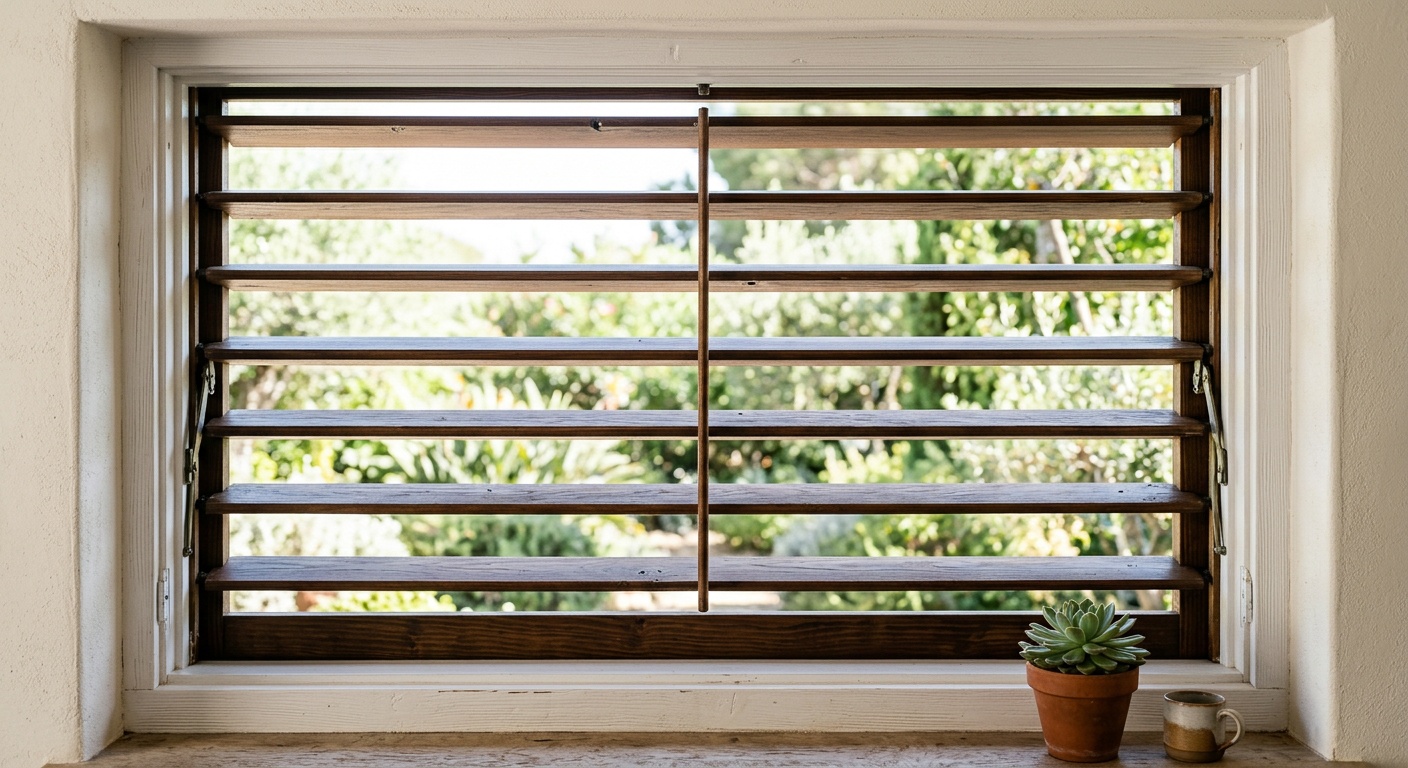
- Motorized louvres with Building Management System (BMS) integration for automated opening/closing based on temperature, CO₂ sensors, and wind speed
- Double-skin facades that create a tempered buffer zone, enabling ventilation even during mild rain or moderate wind conditions without compromising thermal performance
- Operable skylights and clerestory windows that serve dual roles of daylighting and stack-effect ventilation
- Insect screens and acoustic baffles that maintain occupant comfort without blocking airflow
Real-World Case Studies: Learning from the Best
Theory is essential, but nothing teaches like built reality. Here are two compelling examples of natural ventilation design executed at scale — and one emerging 2026 project worth watching.
Case Study 1: The Bullitt Center, Seattle — A Decade of Lessons
Completed in 2013 but still one of the world’s most studied high-performance buildings, the Bullitt Center in Seattle has provided over a decade of real operational data. Its natural ventilation system, centered on operable windows with automated BMS control, has consistently delivered indoor CO₂ levels below 800 ppm — well under the ASHRAE 62.1 recommended maximum of 1100 ppm — for over 90% of occupied hours annually. The building’s 2024–2025 operational report confirmed that natural ventilation contributed to a 44% reduction in total building energy use compared to a code-compliant equivalent.
Key lesson: Occupant education matters enormously. The Bullitt Center invests significantly in tenant onboarding, teaching occupants how to work with — not against — the ventilation system. Buildings where occupants override automated systems or block airflow paths consistently underperform their modeled expectations by 15–25%.
Case Study 2: Khoo Teck Puat Hospital, Singapore
Singapore’s tropical climate — hot, humid, and relatively windless at street level — was long considered inhospitable to natural ventilation in healthcare settings. Khoo Teck Puat Hospital shattered that assumption. Opened in 2010 and extensively studied since, the hospital uses a garden-integrated design with internal courtyards, water features for evaporative cooling, and strategically positioned wings to maximize cross-ventilation. By 2025, post-occupancy evaluations confirmed the hospital uses 30% less energy than a comparable mechanically ventilated healthcare facility of the same size — remarkable given Singapore’s climate demands.
Key lesson: Even challenging climates can support meaningful natural ventilation. The key is climate-specific adaptation — in Singapore’s case, using evaporative cooling, maximizing shading, and focusing ventilation effort during the cooler morning and evening hours when outdoor conditions are most favorable.
Case Study 3 (2026): The Amazon European HQ Expansion, Luxembourg
Currently under construction as of early 2026, Amazon’s expanded European headquarters complex in Luxembourg has been designed to achieve BREEAM Outstanding certification, with natural ventilation as a central design pillar. The project uses a series of interconnected internal courtyards, thermally massive concrete cores, and a sophisticated double-skin facade system to deliver natural ventilation for approximately 70% of annual occupied hours. Preliminary energy modeling projects a 52% reduction in HVAC energy compared to the baseline. Completion is expected by late 2027, and it will provide a landmark data set for large corporate campus natural ventilation performance in a Central European climate.
Common Challenges and How to Overcome Them
Natural ventilation sounds compelling on paper. In practice, three persistent challenges trip up even well-intentioned design teams. Here’s how to navigate them.
Challenge 1: Urban Noise and Air Pollution
Opening windows in dense urban environments can introduce traffic noise (commonly 65–75 dB at street level) and particulate matter (PM2.5 levels in many cities still exceed WHO guidelines in 2026). This creates a genuine tension between ventilation and occupant comfort.
Solution: Employ acoustic glazing with trickle ventilators, or design high-level openings that draw air from above street-level pollution. Inlet air filtration using low-energy passive filters (electrostatically charged fibers) can reduce PM2.5 penetration by up to 60% without significantly impeding airflow. High-level courtyards — set back from street facades — consistently show 30–40% lower particulate concentrations than street-level openings.
Challenge 2: Climate Variability and Unpredictability
Natural ventilation performance is inherently variable — what works beautifully on a breezy October afternoon may be inadequate on a still, humid August morning. This variability makes building owners nervous, particularly in commercial and healthcare applications where consistent indoor conditions are non-negotiable.
Solution: Design hybrid ventilation systems that seamlessly blend natural and mechanical modes. A well-designed hybrid system defaults to natural ventilation whenever conditions allow (typically 40–60% of the year in temperate climates) and activates low-energy mechanical top-up only when needed. BMS integration with real-time weather data feeds (now standard in smart building platforms as of 2026) enables predictive switching that minimizes mechanical use while guaranteeing comfort thresholds.
Challenge 3: Occupant Behavior and Control
Natural ventilation requires active participation from occupants — or well-designed automation to compensate when participation is lacking. Research consistently shows that without guidance, occupants frequently make suboptimal decisions: leaving windows open during rain, closing them on warm days when ventilation is most needed, or blocking grilles with furniture.
Solution: Combine sensor-driven automation (CO₂, temperature, humidity, and wind speed sensors triggering motorized openings) with intuitive occupant interfaces. Simple digital dashboards showing real-time indoor air quality and ventilation status have been shown in multiple post-occupancy studies to increase cooperative behavior by 35–45%. Design ventilation controls to be visible, understandable, and rewarding to engage with.
Performance Comparison: Natural vs. Mechanical Ventilation Systems
The table below compares key performance metrics between fully mechanical HVAC, hybrid ventilation, and purely natural ventilation systems across typical commercial office buildings in a temperate climate (Northwestern Europe, 2025–2026 benchmark data).
| Metric | Full Mechanical HVAC | Hybrid Ventilation | Natural Ventilation Only |
|---|---|---|---|
| Annual HVAC Energy Use (kWh/m²) | 85–120 | 40–65 | 15–30 |
| Average Indoor CO₂ Levels (ppm) | 900–1100 | 700–900 | 600–800 |
| Occupant Satisfaction Score (/10) | 6.2 | 7.8 | 8.4 |
| Capital Cost Premium vs. Standard (%) | 0% (baseline) | +3–6% | +5–12% |
| Typical Payback Period (years) | N/A | 5–8 years | 7–12 years |
Now let’s look at the energy savings potential visually, comparing the percentage reduction in HVAC energy consumption achievable through different natural ventilation strategies relative to a full mechanical baseline:
HVAC Energy Reduction by Natural Ventilation Strategy (%)
35%
42%
50%
45%
38%
Source: IEA Buildings Report 2025; ASHRAE 2025 Technical Committee Data; CIBSE Natural Ventilation Group Analysis 2025
Practical Implementation Roadmap
Whether you’re an architect just beginning to integrate natural ventilation into your practice, or a building owner evaluating a retrofit opportunity, here’s a phased approach that translates principles into action.
Phase 1: Site and Climate Analysis (Weeks 1–3)
- Commission a wind rose analysis for your specific site, not just the regional average
- Map solar exposure, adjacent obstruction heights, and prevailing wind directions by season
- Assess local air quality (PM2.5, NOx levels) to determine filtration requirements for inlet openings
- Review local building code requirements — many jurisdictions now offer compliance pathways that credit natural ventilation
Phase 2: Concept Design Integration (Weeks 4–8)
- Establish building orientation to maximize wind exposure on primary ventilated facades
- Determine appropriate floor plan depth based on ceiling heights and ventilation strategy
- Identify opportunities for stack effect elements: atria, wind towers, solar chimneys
- Engage a specialist facade engineer early — facade design and ventilation strategy are inseparable
Phase 3: Detailed Design and CFD Modeling (Weeks 8–16)
- Run CFD simulations for at least three seasonal wind conditions (winter, summer, shoulder)
- Model thermal comfort outcomes using ASHRAE 55 adaptive comfort criteria
- Size openings based on modeled air change rates (target 6–10 ACH for occupied periods)
- Design the BMS control strategy for hybrid operation: define trigger conditions for mechanical backup
Phase 4: Construction and Commissioning
- Verify that contractor specifications match design intent for opening dimensions and hardware
- Commission all motorized controls and sensor networks before occupancy
- Develop occupant engagement materials: a simple one-page guide beats a 40-page technical manual
Phase 5: Post-Occupancy Evaluation
- Monitor indoor CO₂, temperature, humidity, and occupant satisfaction for at least 12 months post-occupancy
- Compare actual energy data against modeled projections — performance gaps are common and instructive
- Adjust BMS parameters seasonally based on real operational data
Frequently Asked Questions
Can natural ventilation work effectively in hot and humid tropical climates?
Yes — with important caveats. In tropical climates like Southeast Asia or coastal West Africa, natural ventilation can deliver meaningful cooling through evaporative effects, air movement over skin (increasing perceived comfort even at higher temperatures), and strategic shading. The key is designing for air speed rather than air temperature reduction alone. ASHRAE 55’s adaptive comfort model recognizes that occupants in naturally ventilated buildings tolerate and even prefer slightly higher temperatures when they have personal control over airflow. Projects like Khoo Teck Puat Hospital in Singapore demonstrate that 30%+ energy savings are achievable even in tropical conditions. However, full mechanical dehumidification may still be necessary in extremely humid periods; hybrid systems are the pragmatic answer for most tropical applications.
What is the minimum wind speed required for effective natural cross-ventilation?
Effective cross-ventilation can occur at wind speeds as low as 1–2 m/s (roughly 3.6–7.2 km/h), though optimal performance is achieved at 3–5 m/s. Most temperate climate locations experience these conditions for the majority of the year. For very low-wind environments (sheltered urban sites, still summer days), the stack effect becomes the primary ventilation driver, which is why combining cross-ventilation design with stack-effect features is best practice. Building height also matters: at 10 meters above ground, wind speeds are typically 20–40% higher than at street level — one reason high-level openings are so effective.
How does natural ventilation interact with fire safety regulations?
This is one of the most common regulatory friction points in natural ventilation design. Openings that serve ventilation purposes can, in a fire event, act as smoke spread pathways. Building codes in most jurisdictions require that ventilation openings in fire-rated compartments be fitted with automatic fire dampers or interlocked smoke control systems. Modern BMS integration addresses this elegantly: the same automation that controls ventilation for comfort can instantly close all openings upon detection of smoke or upon fire alarm activation. It’s critical to engage fire engineers as part of the design team from concept stage rather than retrofitting compliance solutions later — the latter is invariably more expensive and often compromises ventilation performance.
Your Blueprint Forward: Design Buildings That Breathe — and Perform
Here’s what the most successful practitioners of natural ventilation design understand that the rest of the industry is still catching up to: natural ventilation is not a feature you add to a building — it’s a framework you design the building around. The difference between a building where it works beautifully and one where it’s an afterthought manifests in every occupant’s daily experience and in every energy bill for the next 50 years.
As you move forward, whether you’re designing from scratch or reimagining an existing structure, keep these essential takeaways front of mind:
- Start with the wind rose and solar analysis — every design decision follows from understanding your site’s specific climate profile
- Embrace hybrid systems without apology — the goal is maximum natural ventilation, not zero mechanical systems; pragmatic hybrids consistently outperform idealistic pure-natural approaches in real operation
- Invest in CFD modeling early — the cost of a thorough simulation at concept stage is a fraction of the cost of correcting a poorly ventilated building post-construction
- Design for occupants, not just physics — systems that require occupant cooperation need intuitive interfaces and engagement strategies; automation should complement, not replace, occupant agency
- Measure everything after you build it — post-occupancy evaluation data is how the profession learns and improves; contribute to the knowledge base by documenting your outcomes
The broader trajectory is clear: as climate resilience requirements tighten, as energy costs remain elevated into the late 2020s, and as occupant health and wellbeing continue to shape building value, natural ventilation will shift from a differentiator to a baseline expectation. The buildings being designed right now — in 2026 — will be operating for 40, 50, 60 years into a warming climate. The investment in getting ventilation design right today is an investment in relevance, resilience, and responsibility for the decades ahead.
So here’s the question worth sitting with: Of the five strategies covered in this article — cross-ventilation, stack effect design, thermal mass, wind catchers, and hybrid BMS integration — which one are you underutilizing in your current projects, and what would it take to change that on your very next design?
Article reviewed by Dr. Elena Vasquez, Architectural Permit Specialist & Building Code Consultant, on June 8, 2026