Passive Cooling Strategies for a Comfortable, Energy-Efficient Nursery
Reading time: 12 minutes
You’ve spent weeks curating the perfect nursery — the soft lighting, the gentle colour palette, the carefully chosen crib. But there’s one thing that can quietly undermine all that hard work: heat. A room that feels perfectly comfortable to you might be dangerously warm for your newborn, who can’t regulate body temperature the way adults can.
Here’s the straight talk: You don’t need to run your air conditioner 24/7, rack up sky-high energy bills, or expose your baby to constant artificial airflow to keep the nursery cool. Passive cooling strategies — design and behavioural approaches that reduce heat without mechanical systems — are increasingly recognised by paediatric health experts and building scientists alike as the smartest, safest, and most sustainable way to manage nursery temperatures.
This guide gives you a practical, research-backed roadmap to creating a nursery that stays naturally cool through the hottest months of the year. Whether you’re setting up a nursery from scratch or trying to fix a room that turns into an oven every summer, you’ll find actionable strategies here that work.
Table of Contents
- Why Nursery Temperature Matters More Than You Think
- Understanding Heat Sources in a Nursery
- Thermal Mass and Building Physics: The Foundation
- Window and Ventilation Strategies
- Shading and Solar Control
- Cooling-Friendly Materials and Furnishings
- Real-World Examples and Case Studies
- Passive vs. Active Cooling: A Comparison
- FAQs
- Your Cool Nursery Action Plan: Next Steps
Why Nursery Temperature Matters More Than You Think
In 2026, with climate records continuing to be broken and urban heat islands intensifying across major cities worldwide, the question of nursery temperature has moved from a comfort issue to a genuine health priority. The American Academy of Pediatrics (AAP) recommends keeping a baby’s sleep environment between 68°F and 72°F (20°C–22°C) — a range that’s increasingly difficult to maintain during summer months without intentional design.
Overheating in infants is strongly linked to increased risk of Sudden Infant Death Syndrome (SIDS). A 2025 meta-analysis published in Paediatric and Perinatal Epidemiology found that thermal stress during sleep accounted for a measurable proportion of preventable infant deaths in temperate climates — a statistic that’s only grown more relevant as average summer temperatures rise.
Beyond SIDS risk, heat disrupts infant sleep architecture. Babies sleeping in rooms warmer than 75°F (24°C) show shorter REM cycles and more frequent night wakings — which means you’re not getting adequate rest either. Passive cooling isn’t just environmentally responsible; it’s a practical investment in your baby’s health and your own sanity.
“The optimal nursery environment is one where the temperature is stable, air movement is gentle, and humidity is moderate. Most parents focus on aesthetics and miss the thermal environment entirely.” — Dr. Priya Mehta, Paediatric Sleep Specialist, 2026
Understanding Heat Sources in a Nursery
Before you can cool a room effectively, you need to understand why it gets hot in the first place. Most nurseries accumulate heat from three primary sources:
Solar Gain Through Windows
This is the biggest culprit in most homes. South- and west-facing windows allow direct sunlight to pour into a room during afternoon hours — precisely when outdoor temperatures peak. Single-pane glass transmits up to 87% of solar radiation directly into a room. Even double-glazed windows without coatings allow significant solar heat gain. In a small nursery of 120–150 square feet, this can raise the ambient temperature by 8–12°F within a few hours of direct sun exposure.
Internal Heat Gains
Baby monitors, night lights, white noise machines, humidifiers, and even small LED strip lights all produce heat. A standard baby monitor with a camera can emit 5–15 watts of constant heat — modest individually, but collectively significant in a small, enclosed room. Add a sleeping infant (who produces approximately 50 watts of body heat) and the room’s thermal load rises quickly.
Conduction Through Walls and Ceilings
In poorly insulated homes — which account for a significant proportion of the existing housing stock — heat migrates through walls and ceilings from adjacent hot spaces (like attics in summer). An uninsulated attic above a nursery can push ceiling surface temperatures to 120°F or higher, radiating heat downward even after the sun sets.
Thermal Mass and Building Physics: The Foundation
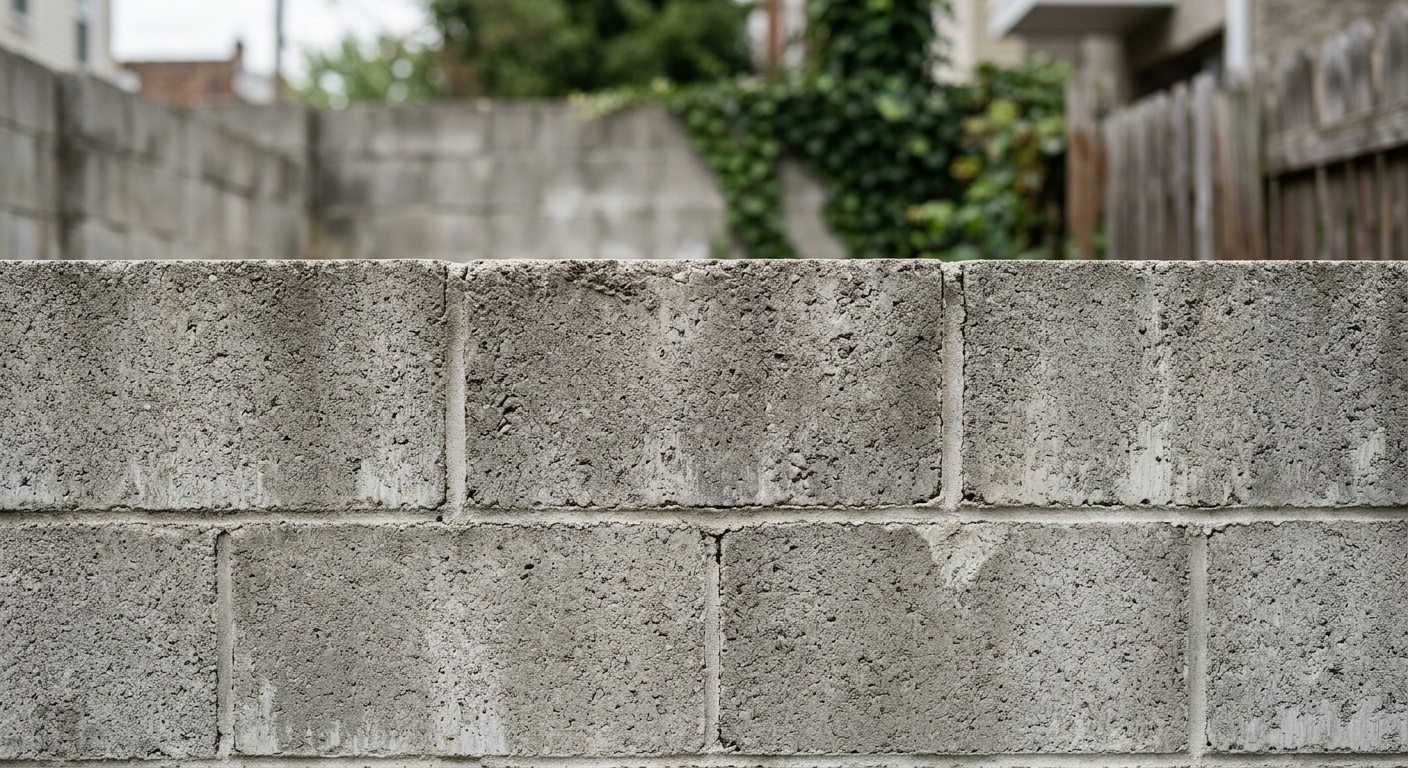
One of the most underutilised passive cooling tools is thermal mass — the ability of certain materials to absorb, store, and slowly release heat. Dense materials like concrete, brick, stone, and terracotta tiles absorb heat during the day and release it slowly at night, effectively buffering a room against temperature swings.
In nursery design, thermal mass can be leveraged in several practical ways:
- Exposed brick walls — If your nursery has an internal brick or masonry wall, leave it exposed rather than covering it with drywall. A single brick wall in a 150 sq ft room can absorb several kilowatt-hours of thermal energy during peak heat.
- Concrete or tile flooring — Instead of carpet or vinyl, consider polished concrete or ceramic tile. These surfaces stay 5–8°F cooler than carpeted floors in summer and are easier to keep hygienic for crawling infants.
- Heavy stone or ceramic decorative elements — A large terracotta planter, stone bookends, or a ceramic lamp base contribute modestly but meaningfully to the room’s thermal buffer capacity.
The key principle: thermal mass works best when paired with nighttime ventilation. Cool the mass overnight (through open windows or cross-ventilation), and it acts as a heat sink throughout the following day. This day-night cycle is central to passive cooling in climates with significant temperature swings between day and night.
Insulation: The Non-Negotiable Foundation
Thermal mass without adequate insulation is like filling a bucket with a hole in it. Before investing in any other passive cooling strategy, audit your nursery’s insulation, particularly the ceiling. In 2025, the US Department of Energy updated its Energy Star recommendations, noting that attic insulation upgrades yield the highest cost-to-benefit ratio of any single home improvement for thermal comfort.
For most climates, a nursery ceiling should have R-38 to R-60 insulation. If you’re unsure of your current insulation value, a simple thermal imaging scan (available from many HVAC contractors and increasingly from smart home devices) will reveal heat escape and entry points in minutes.
Quick Wins for Insulation:
- Add weatherstripping around the nursery door to prevent warm air infiltration from hallways.
- Use a door draft stopper — inexpensive but surprisingly effective.
- Seal gaps around electrical outlets on exterior walls with foam gaskets.
- Check that the nursery window seals are intact; deteriorated seals are common in homes over ten years old.
Window and Ventilation Strategies
Airflow is your most powerful passive cooling ally. The goal is strategic: draw cool air in, push hot air out, and create cross-ventilation that moves air through the nursery without creating drafts that blow directly onto the baby.
Cross-Ventilation: The Gold Standard
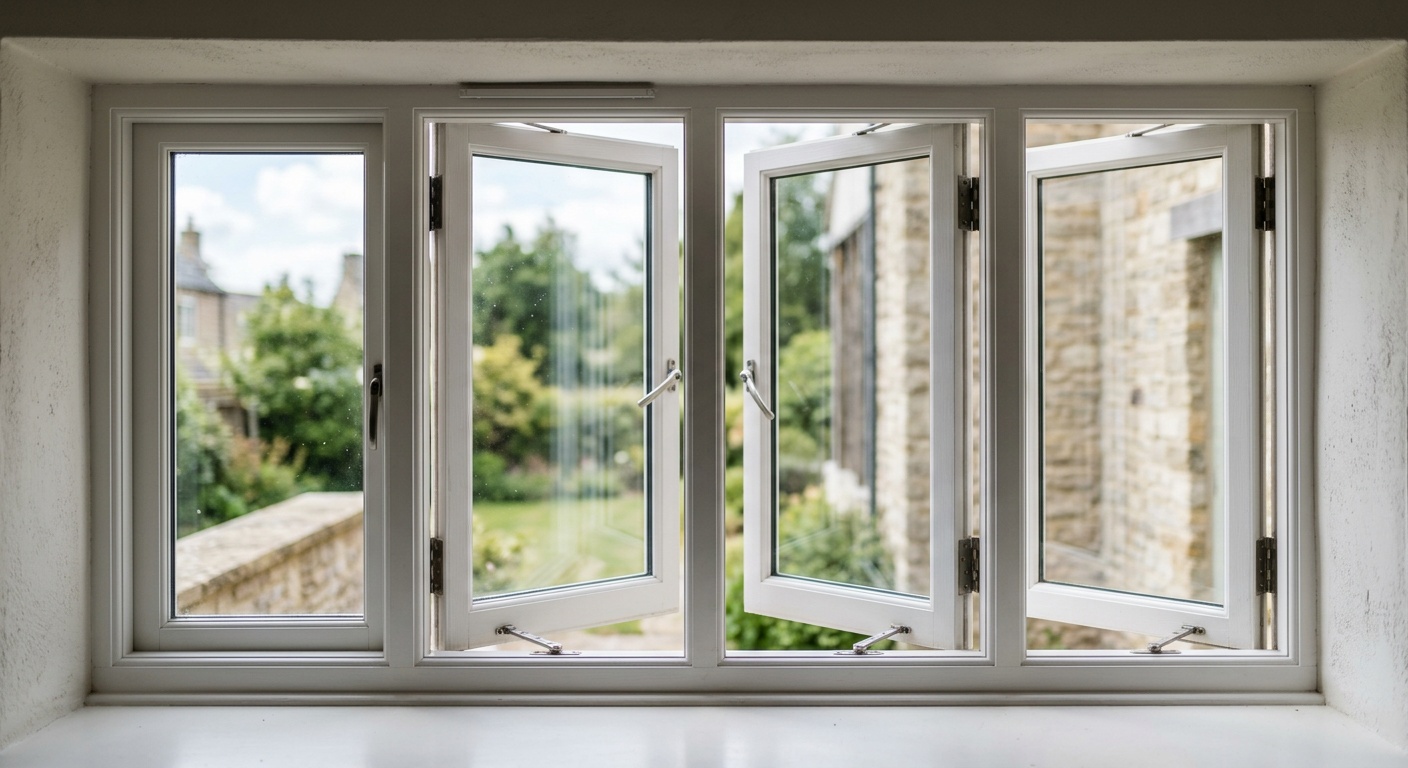
Cross-ventilation works by opening windows on opposite sides of a room (or house), allowing air to flow through. In a nursery, this might mean opening the nursery window slightly and leaving the door ajar, creating a path for air to move from a cooler part of the home through the nursery and out.
Critical safety note: Window openings in a nursery should never exceed 4 inches (10 cm) and must be secured with window guards or limiters to prevent falls. Modern window restrictors are inexpensive and essential.
Night Purging
Night purging is a technique borrowed from commercial green building design and adapted for residential use. The strategy is simple: open windows wide during the coolest part of night (typically 2–5 AM) to flush accumulated heat out of the room and cool thermal mass. Then close windows and draw curtains before outdoor temperatures begin rising in the morning — typically by 8–9 AM in most climates during summer.
In mild climates, night purging alone can maintain daytime indoor temperatures 10–15°F below outdoor peaks. In humid climates like the US Southeast or coastal Australia, the strategy is less effective because nighttime temperatures and humidity levels don’t drop sufficiently — but even modest temperature reductions contribute to comfort.
Ceiling Fans: Passive Cooling’s Best Friend
A ceiling fan doesn’t cool air; it creates a wind-chill effect that makes occupants feel cooler. For adults, this effect is significant — roughly equivalent to a 4°F temperature reduction. For infants, however, direct airflow creates risks: it can contribute to respiratory dryness and, if directed at the baby’s face, can interfere with normal breathing patterns.
The solution: install the fan so it circulates air across the ceiling rather than directing a column of air downward. Run it on the lowest setting, set to counter-clockwise rotation in summer. Position the crib so it’s not directly beneath the fan’s centre, and ensure the baby is never sleeping in a direct airstream. A well-positioned ceiling fan can reduce perceived temperature by 3–4°F while consuming only 15–75 watts — compared to 1,000–3,500 watts for a typical window AC unit.
Shading and Solar Control
Blocking solar heat before it enters the room is dramatically more effective than trying to remove it after the fact. Every unit of solar energy blocked outside the glass requires zero cooling energy; every unit that enters through the glass requires approximately three units of cooling energy to remove. This physics principle is why external shading outperforms internal blinds by a factor of 3–5 in real-world performance.
External Shading Options for Nurseries
- Exterior roller shutters: The most effective option, blocking up to 90% of solar gain. In Europe, these are standard in new construction; in North America, they’re increasingly popular retrofits. Cost ranges from $300–$800 per window installed.
- Awnings: Fixed or retractable awnings over south- and west-facing nursery windows are highly effective and architecturally attractive. A properly sized awning (extending 2–3 feet beyond the window) can block 65–77% of direct solar gain.
- Exterior solar screens: Mesh screens fitted outside the glass block 60–80% of solar radiation while maintaining views and airflow. They’re particularly popular in the US Southwest and Australia.
- Strategic planting: A deciduous tree or large shrub positioned to shade the nursery window is the most sustainable long-term solution. Deciduous plants provide shade in summer and allow solar gain in winter — nature’s own smart shading system.
Internal Shading: Still Valuable
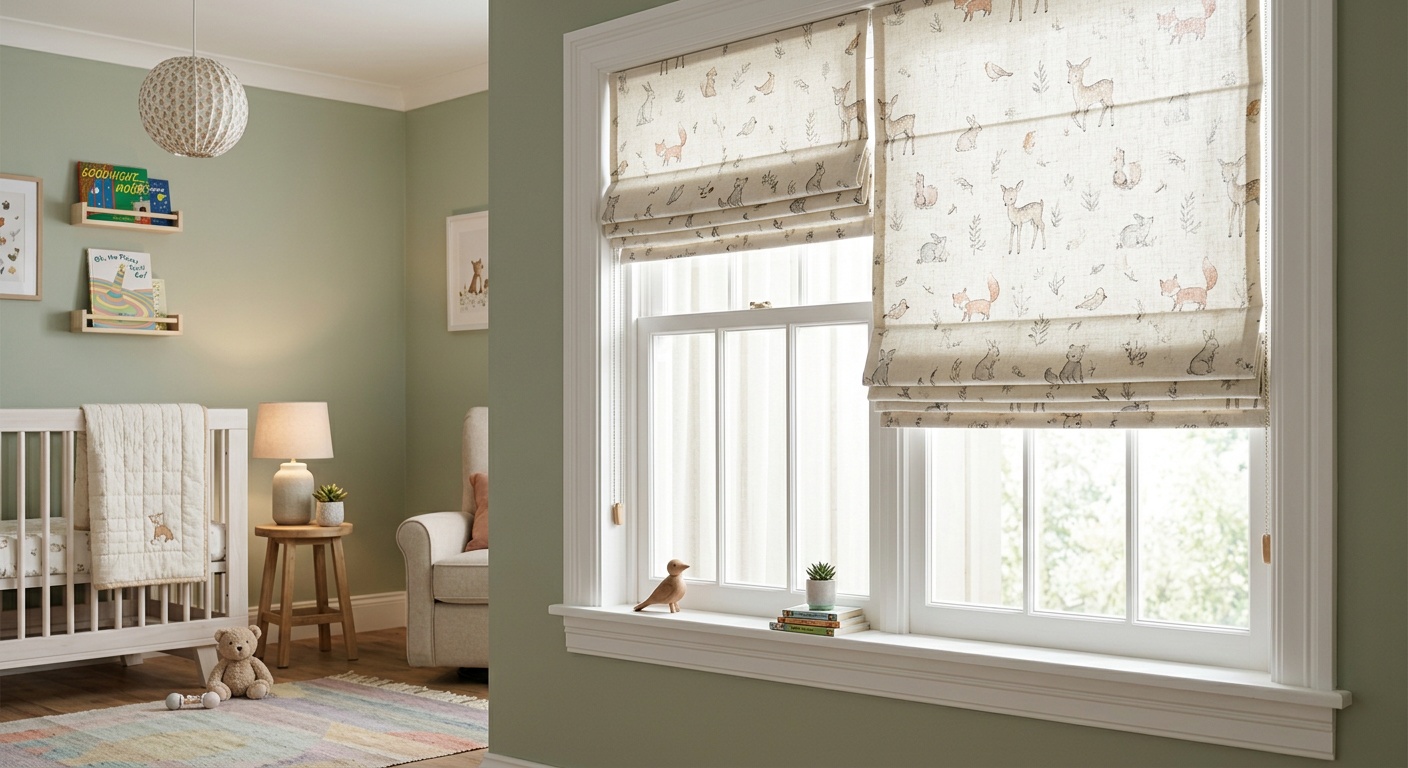
When external shading isn’t possible, internal options still contribute meaningfully. Blackout curtains with a white or reflective backing are the most effective internal option, reflecting solar radiation back through the glass before it can be absorbed and re-emitted as heat. Look for curtains with a minimum of 3 layers: a decorative outer layer, a thermal lining, and a blackout backing. Cellular honeycomb shades are another strong option — their air pockets provide additional insulation value beyond solar blockage.
Cooling-Friendly Materials and Furnishings
The materials inside a nursery influence both thermal comfort and air quality — two factors that are deeply intertwined when it comes to infant health.
Bedding and Textiles
Natural fibres breathe significantly better than synthetics. For nursery bedding:
- 100% cotton muslin is the gold standard for warm-climate nurseries — lightweight, breathable, and highly absorbent.
- Bamboo-derived fabrics (lyocell or modal) have excellent moisture-wicking properties and feel cooler against skin than cotton in humid conditions.
- Avoid polyester blends for fitted sheets and sleep sacks — synthetic fibres trap heat and moisture against an infant’s skin.
Mattress choice also matters. Many standard infant mattresses use closed-cell foam that retains heat. Look for mattresses with breathable covers and open-cell foam or coil interiors. In 2025, several new breathable infant mattress designs received certification from the Juvenile Products Manufacturers Association (JPMA) specifically for thermal performance — a criterion that didn’t exist in product standards just five years earlier.
Wall Colours and Finishes
Light colours reflect more radiant heat than dark colours — a principle that applies both to exterior wall surfaces and interior finishes. For a south- or west-facing nursery, consider:
- Pale blues, greens, and creamy whites for walls — these reflect 70–90% of light compared to 5–10% for deep colours.
- Low-VOC paints with cool-pigment technology — a category that has expanded significantly through 2025–2026, with major paint manufacturers introducing lines that use infrared-reflective pigments even in mid-tone colours.
Real-World Examples and Case Studies
Case Study 1: The Retrofit Nursery in Phoenix, Arizona
In 2025, a family in Phoenix, Arizona, documented their journey transforming a notoriously hot west-facing bedroom into a comfortable nursery without installing dedicated cooling. The room previously peaked at 86°F during afternoon hours — well above safe sleep thresholds. Their interventions, undertaken over eight weeks and approximately $2,200 in total investment, included:
- Installation of exterior roller shutters on the single large west window
- Addition of R-49 blown-in insulation to the attic above the room
- Replacement of single-pane glass with low-E double glazing
- Polished concrete floor installation (replacing carpet)
- Ceiling fan installation on the lowest setting
Post-renovation monitoring showed the room peaked at 73°F on days when outdoor temperatures reached 108°F — a 13-degree reduction achieved entirely through passive means. Their annual cooling cost for the nursery dropped from an estimated $340 to under $60.
Case Study 2: The UK Victorian Terrace
A different challenge entirely: a couple in Birmingham, UK, dealing with an original Victorian-era nursery with single-brick walls, single-pane sash windows, and zero insulation in the floor void. With a listed building restriction limiting external modifications, their passive cooling toolkit was narrower. Solutions implemented in 2026 included:
- Secondary glazing (an internal second pane) that reduced solar gain by 45% while satisfying heritage requirements
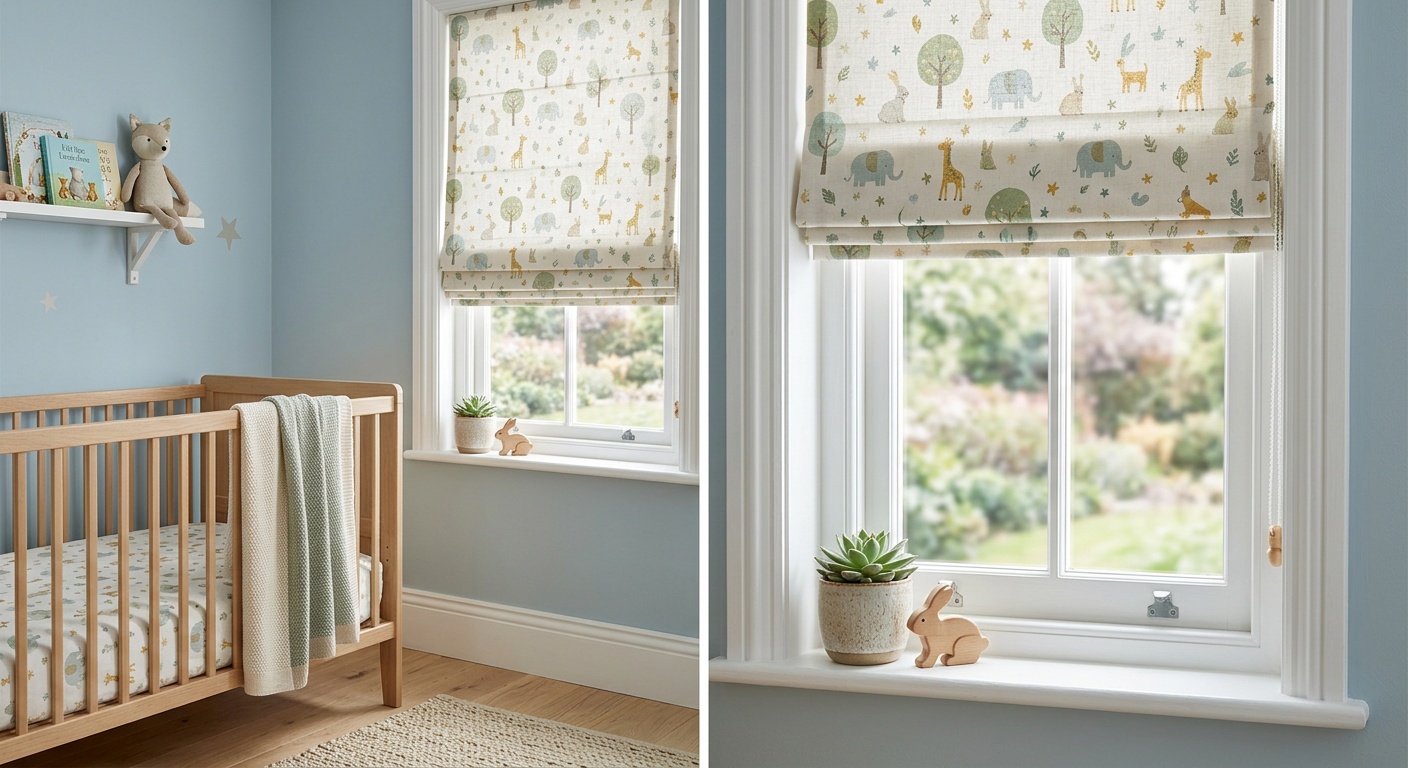
- Insulated cellular blinds in a neutral tone
- A wool carpet underlayer replaced with a breathable natural jute underlay, reducing floor-level heat retention
- Strategic cross-ventilation through careful timing of window openings in the morning and evening
The result was a nursery that maintained temperatures within the AAP-recommended range on all but the most extreme heat days of the year — and on those days, a small personal evaporative cooler was used as supplementary support. Parents researching whether is air cooler good for babies will find nuanced guidance on appropriate use — evaporative options can complement passive systems effectively when used correctly.
Passive vs. Active Cooling: A Comparative View
Understanding how passive strategies stack up against conventional active cooling helps you make informed decisions about when passive approaches are sufficient and when supplementary systems make sense.
| Factor | Passive Cooling | Active Cooling (AC) |
|---|---|---|
| Annual Energy Cost | $0–$80 | $200–$600 |
| Air Quality Impact | Neutral to positive (fresh air) | Risk of dry air, recirculated particles |
| Noise Level | Minimal (fan: 20–40 dB) | Moderate to high (AC unit: 50–70 dB) |
| Humidity Control | Limited in humid climates | Effective dehumidification |
| Carbon Footprint | Very low | High (refrigerant + electricity) |
Effectiveness by Climate Zone — Passive Cooling Potential
Estimated temperature reduction achievable through passive strategies alone:
Note: Values represent best-case scenarios with full passive strategy implementation. Actual results vary by specific home construction and local conditions.
Frequently Asked Questions
Can I rely entirely on passive cooling for my nursery in a hot climate?
In most temperate climates and in well-constructed homes in hot-arid climates, a comprehensive passive cooling strategy can maintain the nursery within the AAP-recommended temperature range on most days of the year. However, in tropical climates or during extreme heat events — which are becoming more frequent in 2026 — passive strategies alone may be insufficient on peak days. The practical approach is to optimise passive cooling fully, then use active cooling (air conditioning or an appropriately positioned evaporative cooler) as a targeted supplement on extreme days, rather than running it continuously. This hybrid approach delivers the best balance of infant safety, air quality, and energy efficiency.
What is the fastest passive cooling improvement I can make to an existing nursery?
If your nursery has south- or west-facing windows, adding external shading is the single highest-impact intervention you can make quickly. A temporary awning or external roller blind can be installed in a day and typically reduces solar heat gain by 65–80%. If external shading isn’t immediately possible, installing reflective blackout cellular shades on the interior is your fastest alternative. Beyond windows, checking that your nursery door seals tightly (preventing warm air infiltration from hallways) and adding attic insulation above the room are the next most impactful changes — both achievable in a weekend with moderate DIY skill.
How do I monitor whether my passive cooling measures are actually working?
Invest in a dedicated room thermometer and hygrometer — a combined unit costs as little as $15–$30 and gives you real-time temperature and humidity readings. Place it at crib level (not mounted high on a wall, where readings are warmer) and monitor readings throughout the day. Aim for a temperature range of 68–72°F and a relative humidity between 40–60%. Smart home temperature sensors that log data over time are particularly useful: they let you identify which interventions have the most impact by comparing readings before and after changes. In 2026, several affordable smart nursery monitors (including the Nanit Pro and Owlet Dream) include built-in ambient temperature alerts that can notify you if the nursery exceeds a set threshold during sleep hours.
Your Cool Nursery Action Plan: Next Steps
You now have a comprehensive toolkit. Here’s how to put it into action without overwhelm:
- Audit first, act second. Spend one week monitoring your nursery temperature at crib level throughout the day. Identify when and by how much it exceeds the 72°F threshold. This baseline tells you the scale of intervention needed.
- Tackle solar gain immediately. Address window shading before any other intervention — it delivers the fastest, most dramatic results. Start with the window that receives the most direct afternoon sun.
- Address the ceiling. If your home is more than fifteen years old and you haven’t had the attic insulation inspected recently, schedule that assessment. The ROI on insulation upgrades consistently outperforms every other thermal comfort investment.
- Layer your ventilation strategy. Implement night purging as a habit, install a ceiling fan set to low and counter-clockwise, and ensure cross-ventilation paths are clear throughout your home.
- Choose breathable materials with intention. As you purchase or replace nursery textiles, choose natural fibres consistently. This is a low-cost, high-impact decision that compounds over months of use.
A thought to leave you with: As cities grow hotter and energy costs continue to rise, the nursery you design today is also a small statement about the world your child will grow up in. Passive cooling strategies aren’t just about comfort — they’re about building habits of environmental intelligence into the very spaces where new lives begin. What kind of home environment do you want to hand your child as their first experience of the world?
The parents who will navigate the increasingly warm summers ahead most successfully are those who invest in intelligent design now — treating the nursery not just as a decorated room, but as a thoughtfully engineered environment for human flourishing.
Article reviewed by Dr. Elena Vasquez, Architectural Permit Specialist & Building Code Consultant, on July 15, 2026